

Nature as a Mirror of Humanity: Emerson, Creation Care, and Our Moral Responsibility
Mirrors are helpful, revealing tools. Mirrors reflect what is often unseen by our own eyes. Is my hair unkempt? A mirror will show me. Do crumbs remain from my morning croissant? The mirror saves me from possible embarrassment when I arrive at work. Yet mirrors are not always the reflective glass that we hang in our bathrooms. A mirror can be anything that reflects the reality that stands before it. It offers a clear assessment to which one can respond appropriately or ignore completely. Ralph Waldo Emerson argues that nature, too, serves a mirror for humanity.
In a way, a mirror is an honest friend, speaking truth when our perceptions fail us. Mirrors may even reveal societal deceptions, just as the boy who declared the king naked when everyone else participated in a lie. The king, being deceived by his tailors, was told his new invisible robe would reveal his magnificence and that those who were wise and worthy would see the robes. He marched through the town to showcase his majesty to his people, and the crowds cheered and shouted exultations at the beauty of the king’s new robe. Only one boy was willing to speak the truth; he was a mirror.
Ralph Waldo Emerson, in his essay Nature, explains that nature itself is a mirror of humanity. He calls nature “the double of the man” [1]. He comes to this conclusion through his observation that nature is a servant to humanity’s power, capability, and ambition. Nature has little recourse to say “no” to humanity’s resolve. “Nature receives the dominion of man as meekly as the ass on which the Savior rode” [2]. To be certain, Emerson does not promote nature as a resource to be used and abused. Instead, he subtly articulates the role of humanity in this relationship, challenging humanity to live as responsible agents within the humanity–nature relationship.
This challenge is offered in two statements made by Emerson. First, he notices that “[nature] offers all its kingdoms to man as the raw material which he may mould into what is useful.” Here Emerson explains the capability humanity has to affect change in nature. It is also a recognition that humanity may, and often does, impose its will upon nature. Nature is viewed and valued by humanity as a resource—raw material to be shaped. Emerson does not evaluate the ethical implications of such a view; he only observes this as a reality.
The second statement speaks to the mirror-like role nature plays in our own lives. He writes, “One after another his victorious thought comes up with and reduces all things, until the world becomes at last only a realized will—the double of the man” [3]. It is important to notice two things in this statement. Emerson’s use of language (i.e., victorious) seems at first congratulatory of humanity’s ability to dominate nature, to shape it according to its will. Yet this word must not be disconnected from the phrase “and reduces all things.” Emerson is not praising humanity’s ability to shape nature; rather, he is exposing humanity’s hubris in thinking it can produce something greater. Humanity’s victorious thought reduces all things; it reduces nature. Humanity’s victorious thought ultimately shapes nature into its “realized will.” As he concludes, nature then becomes the double of the man; nature becomes the mirror of humanity.
If Emerson is correct that nature is the double of the man, this is a poignant challenge to our modern age. As humanity, we must stop and look at our reflection displayed by nature. Remember, the mirror reveals what our perceptions often miss. The mirror is an honest friend, willing to speak the truth, revealing both the good and the not so good. So then, what does nature—which humanity has shaped according to its will—reveal about humanity? How does the reflection of humanity found in nature judge humanity’s role within the humanity–nature relationship? Or perhaps, using Emerson’s language, how would nature as servant describe humanity as master? Recognizing humanity and nature as both servants of God’s purpose, would humanity be found guilty of wickedness against another, less powerful servant, as in the Parable of the Wicked Servant (Matthew 18:21–35)?
These are questions that each of us should ask of ourselves, our families, and our communities, for it is we who make up humanity. What does our reflection in nature show us? Perhaps a simple answer goes something like this: the health, life, and vibrancy in nature reflect where humanity is getting things right, and the brokenness we see in nature reflects humanity’s brokenness. All of this is because humanity, made in God’s image, was made a species that creates, shapes, and builds. Nature reflects where our creative and shaping efforts are properly aligned or misaligned. Nature is the great revealer of humanity’s heart—the double of the man.
When I look at the reflection offered by nature, I am often humbled and disappointed. I recognize the great depravity of humanity revealed by nature. In the name of convenience and pleasure, we waste when it is unnecessary. We treat nature and all within it as commodities (including other people!) to be used up in an expedient fashion, driven by our greed and lust for more. Individually, corporately, and governmentally, decisions are often made with little regard for how those decisions will affect nature in the present or the future. Additionally, many see the reflection of humanity offered by nature, yet they choose to ignore the reflection altogether. Nature not only declares the glory of God (Psalm 19:1), but it also reveals the sinful actions of humanity through the unhealthy state of much of our environment (Matthew 7:17). Our embrace of sin does not only affect us internally; it manifests itself in how we interact with the world around us.
Yet the reflection offered by nature also gives me hope. My own thought is that we have made great progress in realizing our role and responsibilities within the interrelated and interdependent reality of nature. As Christians, we are beginning to better understand what our roles as stewards of creation mean and what they look like. I am thankful for, and proud of, the work many communities and governments have undertaken to become better stewards of nature. Many Christians are turning away from imposed materialistic views of nature that have sustained its misuse and abuse. Finally, there is a growing realization among Christians that nature is not ours, but God’s alone, and that we must not treat nature as a profane object.
Emerson, therefore, challenges us to look closely at nature and ask what it reveals of humanity’s heart. Does nature flourish under an assisting will, or does it falter under an oppressive will? Moreover, perhaps Emerson could further argue that nature should not reflect humanity at all. Instead, nature should reflect God himself, as humanity lives out the prayers “Not my will but yours be done” and “Thy kingdom come on earth as it is in heaven” (Luke 22:42; Matthew 6:10). By God’s grace, may there come a time when nature no longer reflects the brokenness of humanity, but the glory of the redeeming Christ who has transformed humanity.
If you liked this essay, consider Drew’s essay: Willing the Good of Creation.
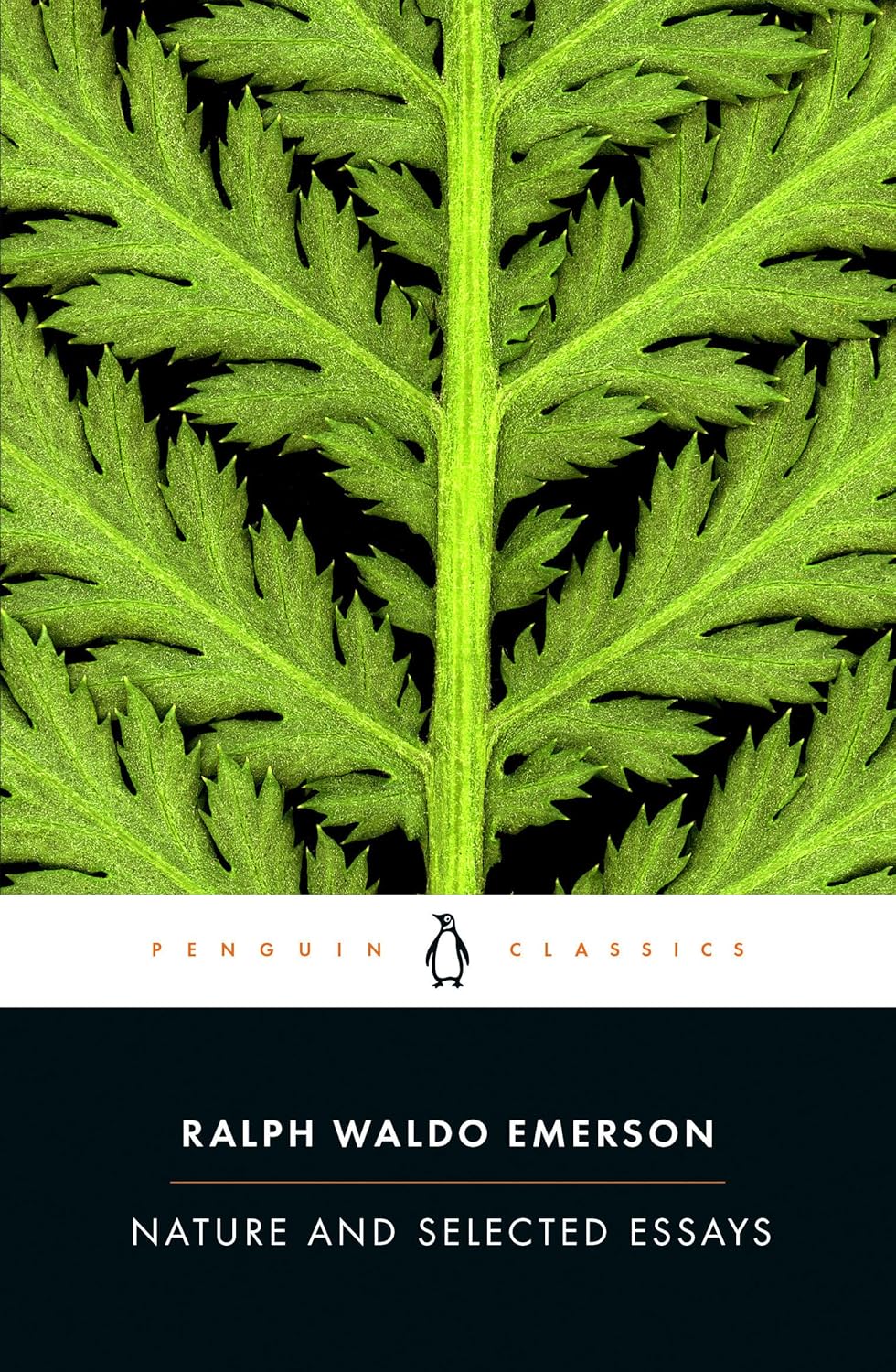
If you have not yet done so, be sure to read Ralph Waldo Emerson’s Nature and other great essays here.
Sources:
[1] Emerson, Ralph Waldo. 2003. Nature and Selected Essays. Edited by Larzer Ziff. New York: Penguin Books, pg. 20.
[2] Ibid.
[3] Ibid.
